When Is a Bone Graft Needed?
A bone graft procedure is used to reconstruct and rebuild bone tissue. It involves transferring healthy bone tissue to a part of the body with damaged or deficient tissues. The tissues used as grafting material can be taken from the patient's body, a cadaver or an animal, or it can be synthetically made in a lab.
Learn some of the reasons why and the circumstances when a bone graft may be needed. There are several common bone grafting techniques that are often used by dentists.
Why do patients need bone grafts?
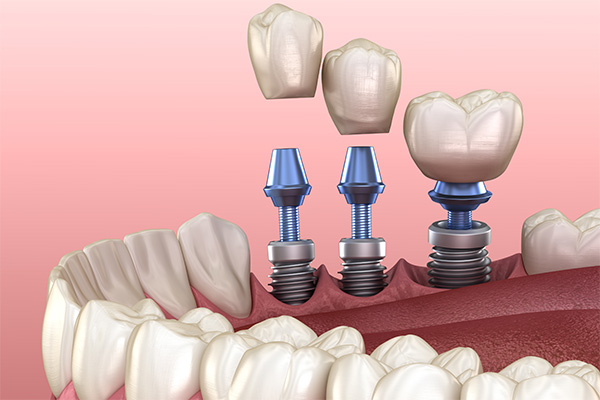
Having healthy jawbone tissue is a prerequisite for dental implants. However, sometimes patients have deteriorated bone tissues that cannot support an implant due to several issues.
For example, a person may lose some bone tissue because a tooth was lost and not replaced with an implant, causing a weakening of jaw bone tissue due to lack of stimulation by the tooth root. The only way to resolve this is to reconstruct the patient’s bones structure with a bone graft.
Common bone graft types
There are four types of bone graft that are commonly used. Each of these types has its own pros and cons:
- Xenograft tissue – This type of graft is taken from animals. This option is typically easy to get. However, there is a risk of transmitting diseases from the source to the patient.
- Alloplast bone graft – This synthetic graft is made for a specific patient. The advantage of this graft is that it is not taken from another living creature. However, it does not stimulate the formation of new bones.
- Autograft tissue – This graft is taken from another part of the patient’s own body. This ensures it is free from any unknown disease but can require extra surgery for the extraction.
- Allograft tissue – This tissue is taken from a cadaver. The advantage is that the transplanted bones may become part of the patient's bone structure. However, the patient's own cells will not be triggered to form new bones.
Bone grafting techniques
There are several commonly practiced techniques for a bone graft. The block bone technique is for patients who have lost or damaged a lot of bone tissue. Usually, the damage has been occurring for quite a while. In this procedure, the dentist takes bones from other parts of the patient’s body. Then, these bones are transplanted into the area that needs to be rebuilt.
The particulate bone technique is for patients who have only lost or damaged a small amount of bone tissue. The difference between this technique and the previous one is that the dentist can immediately perform the dental implant procedure after finishing the bone graft.
Get the treatment you need
A bone graft allows for the rebuilding of jawbone tissue so a patient can be eligible for dental implants. Stop by or call our Saratoga Springs clinic to learn more about bone grafts and how they can be used to help you restore your smile.
Here is how to reach us…
Request an appointment here: https://www.mysaratogadentist.com or call My Saratoga Dentist PLLC at (518) 675-3094 for an appointment in our Saratoga Springs office.
Check out what others are saying about our services on Yelp: Read our Yelp reviews.
Recent Posts
Full mouth reconstruction optimizes oral health, function, and the aesthetic quality of the entire smile when multiple dental issues occur simultaneously. This approach addresses extensive dental concerns all at once rather than treating teeth as separate problems with temporary solutions. Consulting a general dentist can help you create a clear roadmap to eliminate discomfort, correct…
Dental implants are a popular option for replacing missing teeth. While they offer the same aesthetic benefits as other replacement options, there are multiple other benefits provided by dental implants that alternatives fail to deliver.One crucial component of a dental implant is a titanium screw that is placed directly into the jawbone. The screw forms…
The options for replacing missing teeth have brought many people to choose between dentures and dental bridges. It is essential to replace missing teeth for several reasons. Your appearance is affected by missing teeth, and this alone is one of the main reasons people want to replace them. A missing tooth leaves behind a gap…
Dentures are a well-known option for replacing missing teeth that are often given a bad reputation in their reliability. We have all watched the childhood film, where the elderly character has their dentures fall out of their mouth at the dinner table. While this exaggerated age-old misconception is based on legitimate concerns of denture wearing,…