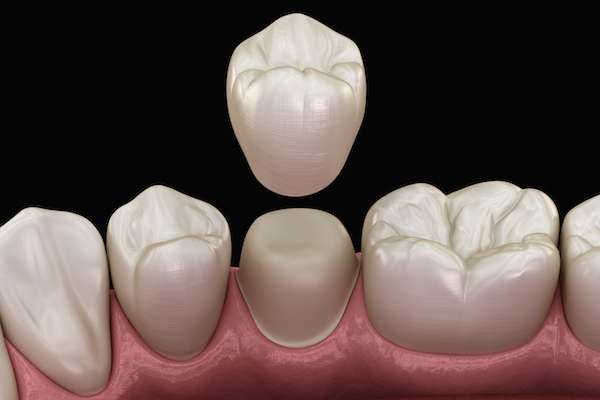
If a general dentist recommends a dental crown, there are a variety of reasons why. Crowns can be used for cosmetic corrections as well as for protection and support. These dental restorations may seem intimidating to those who have never had one, but they do not have to be. Here are some questions to ask a dentist so that the experience can go as smoothly as possible.
Preparing for a crown
Most crowns require two visits to install a permanent version. This first visit involves an examination and preparation of the tooth, including X-rays and impression taking. The patient receives a temporary crown while the permanent one is being made, which is then installed at the second visit. There are some important considerations for the patient, especially while waiting for the permanent crown.
How should a patient care for a temporary crown?
Temporary crowns are typically made of acrylic or stainless steel and are not meant to last like permanent ones. They are also not as secure, so patients must pay special attention to the crowned tooth while waiting for the second visit. A general dentist may provide a list of foods to avoid as well as advise ways to lessen the amount of chewing done with the crowned tooth. Some food that can cause problems include caramel and gum.
How should a patient care for a permanent crown?
Permanent crowns do not require any special care beyond basic oral hygiene. There are some things that patients should keep in mind, however. Crowns are not indestructible, especially those made of porcelain. They can suffer from cracks or chips just like a tooth. While minor damage can be repaired, major damage can require replacement.
Crowns can also loosen and allow infection-causing bacteria into the space between the crown and tooth. Sometimes when they loosen, they can slip off. In both cases it is imperative that patients contact a general dentist as soon as possible. Crowns can also be sensitive to hot or cold foods. Patients are encouraged to seek help from the dentist in this case as well.
Are there different types of crowns?
Traditionally crowns were made of gold and some still are, but these are not as common due to the high price. Dentists today generally use ceramic or porcelain crowns, which provide the closest match to natural teeth. A hybrid porcelain-metal or resin crown may be used where ceramic or porcelain is unsuitable.
How long do crowns last?
Crowns can last as long as 15 years. Patients who bite their fingernails and grind or otherwise wear down teeth can expect a shorter lifespan. Good oral hygiene, which includes using mouthwash and floss, is critical to extending the lifetime of a crown. Barring extreme damage-causing accidents, patients can expect crowns to last a minimum of five years.
Conclusion
It may seem intimidating to get a dental crown, but receiving one is a common procedure. Patients should feel comfortable asking a general dentist about how to prepare for the appointments and care for their crown.
Request an appointment or call My Saratoga Dentist PLLC at 518-675-3094 for an appointment in our Saratoga Springs office.
Recent Posts
The goal of general dentistry can be expressed as treating tooth decay and oral health issues if necessary and preventing them if possible. One of the most effective tools that dentists use in the prevention of tooth decay is fluoride.The enamel is the outermost layer of the tooth. It consists of minerals that combine to…
Tooth decay occurs when bacteria in the mouth damage the tooth's enamel, causing cavities. General dentistry practices can help prevent tooth decay and treat it to avoid the pain, infection, and potential tooth loss that can result from cavities.Bacteria in the mouth is the cause of tooth decay. When these germs combine with food, plaque…
General dentistry is essential for good oral health at every age. Some parents assume that children do not need routine dental care until permanent teeth start to arrive. However, children of all ages should see a dentist on a regular basis. Parents must also be mindful of their child's tooth and gum development and check…