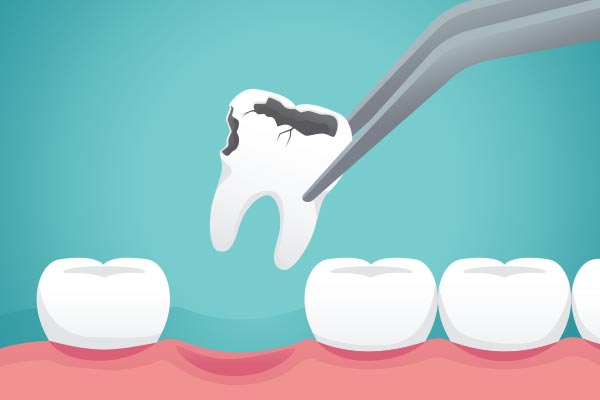
Tooth extraction frequently occurs in the office of a for a variety of reasons, including:
- Bacterial decay
- Accidental breakage
- Overcrowding
- Impaction
Most patients are more concerned about the gap the tooth leaves behind than its fate outside their mouths. An extracted tooth usually takes one of the following paths, depending on whether the dentist or the patient claims it.
Reasons a dentist keeps the tooth
Incineration
A dentist usually places an extracted tooth into a sealed bio-medical bag because it retains the patient's oral tissue and blood, which are potentially infectious materials. Bio-medical waste services remove the bags from dental offices and bring them to facilities to incinerate their contents.
Recycling
If a general dentist pulls a tooth with a filling containing metal, it is necessary to send it to a recycling facility before incineration. Burning a tooth before removing the filling poses a risk of contaminating the air with mercury found in the metal. The metal can be repurposed after it is removed.
Training
Sometimes, dentists send extracted teeth to universities and other institutions where dental students and colleagues receive training. Extracted teeth can help students studying dental diseases and procedures because they present real case studies and practice models.
Research
A general dentist may want to attend seminars and take workshops to learn about new and updated techniques for patient services. By sending extracted teeth to dental laboratories and research facilities, a dentist can help ensure an adequate supply of models to test the efficacy of new procedures before they are recommended and taught.
Reasons a patient keeps the tooth
Patients may want to keep extracted teeth for various reasons. Before releasing a tooth to a patient, a dentist must thoroughly clean it to remove traces of bacteria and tissue.
Sale
Some individuals who have extracted teeth with metal fillings or gold crowns may wish to deliver them to scrap metal collectors who reuse the material. These services will reimburse individuals according to the amount of retrievable metal. Teeth containing gold crowns are particularly desirable.
Sentiment
There are many reasons why patients have sentimental attachments to extracted teeth. Although this mostly occurs with baby teeth, adults may occasionally attach a particular meaning to a tooth, making it a desirable memento.
Bragging rights
Some patients are intrigued by the removal of teeth from their mouths and want to show them to others. Impacted wisdom teeth are usually large, creating a sense of astonishment that some people feel compelled to share.
Projects
A few patients get creative with extracted teeth, using them as display objects, jewelry, or incorporating them into art projects. Although this is not an appealing route for most persons, it does happen. A general dentist must take great care to sanitize the tooth and instruct the patient about its proper handling before releasing it.
Conclusion
Tooth extraction is a standard service provided by a general dentist; however, it is considered a last resort for damaged teeth beyond repair or teeth that pose other oral health risks. Patients who want to keep extracted teeth should notify their dentist before treatment.
or call My Saratoga Dentist PLLC at 518-675-3094 for an appointment in our Saratoga Springs office.
Recent Posts
The goal of general dentistry can be expressed as treating tooth decay and oral health issues if necessary and preventing them if possible. One of the most effective tools that dentists use in the prevention of tooth decay is fluoride.The enamel is the outermost layer of the tooth. It consists of minerals that combine to…
Tooth decay occurs when bacteria in the mouth damage the tooth's enamel, causing cavities. General dentistry practices can help prevent tooth decay and treat it to avoid the pain, infection, and potential tooth loss that can result from cavities.Bacteria in the mouth is the cause of tooth decay. When these germs combine with food, plaque…
General dentistry is essential for good oral health at every age. Some parents assume that children do not need routine dental care until permanent teeth start to arrive. However, children of all ages should see a dentist on a regular basis. Parents must also be mindful of their child's tooth and gum development and check…