Can a Missing Tooth Lead to Jaw Problems?

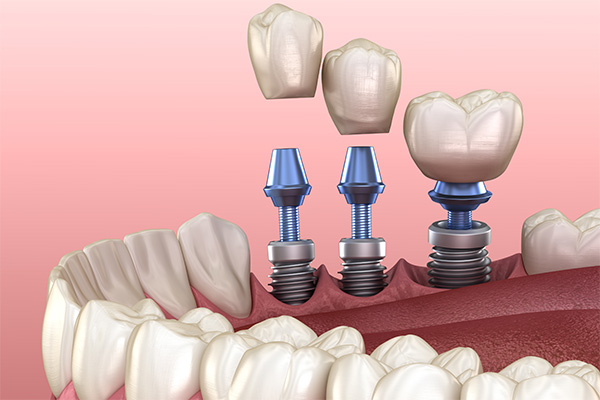
Those who have a are already aware of the challenges that come with the condition, including eating and the negative impact on their self-esteem. What they might not know is that a lost tooth also affects the jaw and the face in different ways. Without replacing the tooth promptly, the potential repercussions may be expensive to correct. Continue reading to learn how having a missing tooth can contribute to problems in the jaw.
The effects of missing teeth on the jaw
The tooth roots send the signals needed for the body to keep sending important minerals to keep the jawbone healthy and in form. When a tooth is missing, the jawbone in the area starts to shrink. The changes may not be obvious immediately, but patients may start to see them as the months go into years since bone loss is inevitable with tooth loss. As more teeth go missing, the jaw may weaken, causing further oral issues. The shrinking jawbone can alter facial appearance and cause wrinkles in certain parts of the face.
At first, the only noticeable sign could be that food debris gets trapped between the space, but gradually, other teeth may start to move from their position to fill the gap, causing changes in bite alignment. Soon, all the teeth in that area will be thrown off balance and the patient’s bite will change. This means the upper and lower teeth will hit each other at odd angles, increasing the risk of tooth chipping or cracking, degraded enamel and temporomandibular joint issues.
Problems with the jaw joint
Essentially, a misaligned bite causes issues with the jawbones and jaw joints (TMJ). With missing teeth, the mouth will try to compensate by using more of the healthy teeth for proper chewing. For instance, if a molar is lost on the right side of the mouth, one may resort to chewing on the left side. This puts undue stress on the teeth and jaw. The result is that patients may start to feel sore on one area of the jaw and muscle atrophy in the other area – undue stress on the temporomandibular joint, which controls jaw movement.
TMJ disorder can cause different symptoms such as headaches and lingering pain in the jaw, neck and temples. It may also cause bruxism, more commonly known as jaw clenching or teeth grinding. The dentist may recommend an oral device to help with TMJ disorder and bruxism, but if the patient has a missing tooth, they will resolve that issue first.
Visit the dentist for treatment
The teeth are essential for eating and talking, but their function is beyond that – every structure of the oral cavity works together to keep everything functional. If you have noticed signs of jaw problems and have a missing tooth, it is advisable to talk to the dentist about replacement options. They can give you options that will not only restore full dental function but ensure your smile looks just as natural as before.
Request an appointment here: https://www.mysaratogadentist.com or call My Saratoga Dentist PLLC at (518) 675-3094 for an appointment in our Saratoga Springs office.
Check out what others are saying about our services on Yelp: Read our Yelp reviews.
Recent Posts
Full mouth reconstruction optimizes oral health, function, and the aesthetic quality of the entire smile when multiple dental issues occur simultaneously. This approach addresses extensive dental concerns all at once rather than treating teeth as separate problems with temporary solutions. Consulting a general dentist can help you create a clear roadmap to eliminate discomfort, correct…
Dental implants are a popular option for replacing missing teeth. While they offer the same aesthetic benefits as other replacement options, there are multiple other benefits provided by dental implants that alternatives fail to deliver.One crucial component of a dental implant is a titanium screw that is placed directly into the jawbone. The screw forms…
The options for replacing missing teeth have brought many people to choose between dentures and dental bridges. It is essential to replace missing teeth for several reasons. Your appearance is affected by missing teeth, and this alone is one of the main reasons people want to replace them. A missing tooth leaves behind a gap…
Dentures are a well-known option for replacing missing teeth that are often given a bad reputation in their reliability. We have all watched the childhood film, where the elderly character has their dentures fall out of their mouth at the dinner table. While this exaggerated age-old misconception is based on legitimate concerns of denture wearing,…