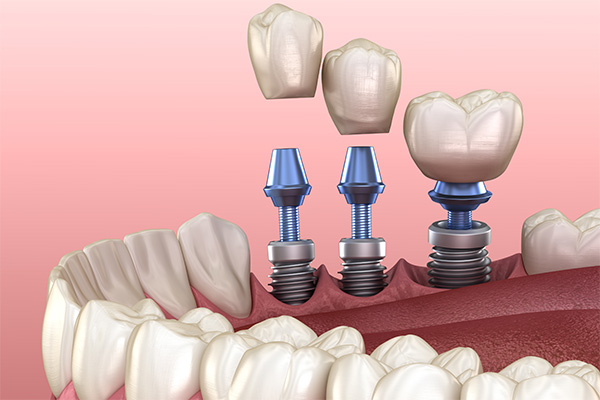
Crown Placement on Dental Implants
Dental implants are one of the popular ways to replace missing teeth. These are oral restorations that are embedded in the patient's jaw. The outer end of the implant is fitted with an artificial tooth, which serves as a replacement for the lost tooth.
How crowns are placed on dental implants
How soon a crown is placed on an implant depends on a number of factors, like how healthy the patient's jaw is and the type of implant being used. Most people who opt for conventional implants have to wait up to six months after implant installation before a crown is attached to the restoration, while crowns can be immediately attached to mini dental implants once they are installed.
Other factors that affect when a dentist decides to attach a crown to an implant include:
1. Osseointegration
This is the process that fuses the implant with the bone tissue holding it in place. It can take up to six months for this process to be complete. Once it is done, the patient is cleared for the crown. The process anchors down the implant, giving it the stability it needs to support the tooth.
For the most part, dentists prefer waiting for this process to be completed before adding the artificial tooth, especially if it is one of the back teeth that is being replaced. If the dentist feels the implant is secure enough after installation, a crown might be placed on it immediately.
2. How recently the missing tooth came off
If a patient needs an extraction prior to implant installation or a tooth was knocked out by trauma, the person will have to wait until the area heals before proceeding. Bone grafting might be performed to keep the bone open so implant installation is easier in the future. Some patients might be able to get an implant the same day a tooth is extracted if they have healthy bone tissue surrounding the socket.
3. How fast the patient heals
The speed at which a patient heals affects how soon a crown can be placed on an implant. Factors that affect how fast a person heals include health conditions like diabetes and habits like smoking. The number of dental implants being installed also affects the patient's recovery rate.
The wait is worth it
Anyone contemplating implants should expect to spend three to six months recovering from the surgical installation of the implant. While it might seem like a long time to wait for a replacement for a missing tooth, dental implants provide a permanent solution that usually lasts the rest of the patient's life if they practice good oral hygiene. Unlike other oral prosthetics like bridges and dentures, implants do not require any special care, so the patient gets to go about their regular routine as if they never lost a tooth.
Get a long-lasting fix
Call or stop by our Saratoga Springs office if you need a replacement for a missing tooth. Our staff will work with you to figure out which dental restoration best suits your needs.
Request an appointment here: https://www.mysaratogadentist.com or call My Saratoga Dentist PLLC at (518) 675-3094 for an appointment in our Saratoga Springs office.
Check out what others are saying about our services on Yelp: Read our Yelp reviews.
Recent Posts
Full mouth reconstruction optimizes oral health, function, and the aesthetic quality of the entire smile when multiple dental issues occur simultaneously. This approach addresses extensive dental concerns all at once rather than treating teeth as separate problems with temporary solutions. Consulting a general dentist can help you create a clear roadmap to eliminate discomfort, correct…
Dental implants are a popular option for replacing missing teeth. While they offer the same aesthetic benefits as other replacement options, there are multiple other benefits provided by dental implants that alternatives fail to deliver.One crucial component of a dental implant is a titanium screw that is placed directly into the jawbone. The screw forms…
The options for replacing missing teeth have brought many people to choose between dentures and dental bridges. It is essential to replace missing teeth for several reasons. Your appearance is affected by missing teeth, and this alone is one of the main reasons people want to replace them. A missing tooth leaves behind a gap…
Dentures are a well-known option for replacing missing teeth that are often given a bad reputation in their reliability. We have all watched the childhood film, where the elderly character has their dentures fall out of their mouth at the dinner table. While this exaggerated age-old misconception is based on legitimate concerns of denture wearing,…