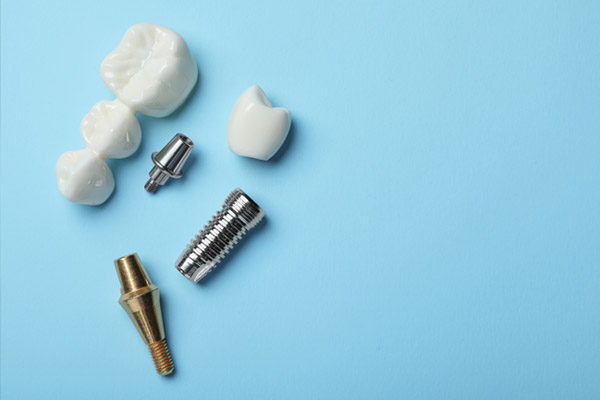
According to the American Dental Association, dental implants are stable because the jawbone grows around them. This process is known as osseointegration, and it is essential for the success of an implant. Several elements can affect this process, and patients undergoing the dental implant procedure should understand what affects an implant fusing to the bone. When armed with quality information, a patient becomes a valuable asset to the treatment process.
Factors for osseointegration of dental implants
Osseointegration depends on the patient's immune response and length of time for healing. While the implant process is slow, it is ideal for replacing missing teeth. Before beginning the procedure, patients need to understand how osseointegration occurs and why it is essential.
Biocompatibility
In dentistry, biocompatibility is vital. The body should not reject any material used for dental restoration. Dental implants are made of titanium, a highly biocompatible material. The jawbone does not recognize this metal as a foreign substance, so it fuses to the implant. If the bone did not grow around the prosthesis, it would become loose and unable to withstand biting forces.
Time
The dental implant process is not a fast one. After the dentist places the implant, it must heal for at least three months. During this time, osseointegration occurs. Once the prosthesis fuses to the bone, the dentist can restore the implant with a dental crown.
If the dentist does not wait the proper amount of time before restoring the implant, it can fail. During the healing stage, an implant cannot withstand heavy biting forces. While the patient may be anxious to have a tooth replaced, only time can create the ideal situation after dental implant placement.
If a bone graft is necessary before a dental implant, additional healing time is needed. Patients must agree to the time commitment before undergoing the procedure, as it can be several months to a year before they have a fully restored tooth.
Healing response
While osseointegration typically only takes a few months, it can be delayed in patients with reduced healing. For example, a patient with uncontrolled diabetes may experience difficulties with healing around the implant site.
After three months, the dentist evaluates the implant area. With dental X-rays, the dentist determines if the prosthesis is stable. If not, more time may be necessary for proper healing.
Because systemic conditions play an integral role in healing, the dentist must carefully review each patient's medical history before implant placement. Patients in poor health may not have optimal results, and other tooth-replacement methods may be warranted.
Conclusion
Dentists widely accept dental implants as the standard for replacing a single missing tooth. However, the process is a lengthy one requiring commitment from the patient. Because osseointegration is crucial, patients should understand the benefit of waiting for this process to occur. When patients are well-informed about all treatment options, they can choose the right course of action for dental care.
Request an appointment or call My Saratoga Dentist PLLC at 518-675-3094 for an appointment in our Saratoga Springs office.
Recent Posts
If you are missing one or more teeth, you may consider getting dental implants. Implants are a popular tooth replacement option, as they look and feel like natural teeth and, most enticing of all, have the potential to last for a lifetime. That said, though implants offer several benefits, they do come with a few…
Tooth loss can be caused by injury, disease, or tooth decay. If you are missing one or more teeth, dental implants may be an option for you.Dental implants are metal posts that resemble screws. The posts are inserted into the jawbone of the patient to replace the tooth roots of missing teeth. The implants can…
If you have one or more missing teeth or dentures that move around on you, you might want to consider dental implants. Essentially, implants are man-made devices that act as anchors for various forms of artificial teeth. They can be a great way to restore both your smile and your confidence. Here are some important…