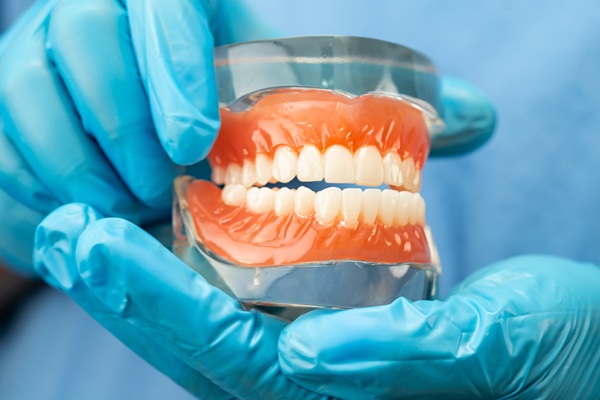
The need for denture repair or replacement occurs at the worst times. When your denture breaks or stops fitting the way it should, the effect on your daily life and comfort can be hard to ignore. Even simple actions such as eating or speaking in front of others can feel uncomfortable. Thankfully, a dental professional can help you get back to your routine by repairing the denture or, if needed, replacing it.
Common causes of denture problems
Dentures are designed to last five to 10 years on average, but they can sometimes develop problems earlier than expected. After all, these oral prosthetics are constantly subjected to chewing, varying food temperatures, and the acidic environment of the mouth. The acrylic base can also become more brittle over time. Small chips and fractures can begin to spiderweb through the base, eventually causing the denture to break.
In other cases, changes in the jawbone, which are common after tooth loss, can alter how the denture fits in the mouth. It may wobble or slip around, particularly while biting and chewing food. Further, when a denture does not sit evenly, it creates hot spots of pressure. This uneven force can snap the acrylic base or cause the false teeth to pop out of place.
A dental professional can determine if the issue is a simple case of material fatigue or a more complex change in the bone structure. The former can typically be fixed with a simple denture repair, while the latter may require a replacement made to fit the new face and bone structure.
When denture repair makes sense
It is often possible to repair a denture. Common repairs include reattaching a broken false tooth and mending a clean fracture in the base. It is also possible to repair a denture that broke cleanly in half. These fixes may be completed relatively quickly, sometimes within a single day if a lab is accessible.
Partial dentures with a broken metal clasp are also frequently repairable. A dentist will assess whether the remaining framework is strong enough to support denture repair before moving forward. This process includes ensuring that the base material is still stable and the teeth show minimal wear.
Finally, denture repair also makes sense when the appliance is relatively new. If a denture that is only a few years old experiences a minor issue, it is more cost-effective to fix it. On the other hand, repairing an old denture that will soon need to be replaced anyway is generally not recommended. Replacing it a bit earlier than planned can save time and money in the long run.
What are relines and rebases?
A reline is a common denture repair in which the dentist adds new material to the underside of the denture. This procedure helps it match the current shape of the gums better, restoring the suction and stability. The dentist may perform a denture relining every few years as the patient's jawbone changes. A rebase is similar but more extensive, replacing the entire pink acrylic base while keeping the original teeth. A reline, in particular, is an effective way to extend the life of a denture that is otherwise in good condition. That said, if the teeth themselves are worn out, a reline will not fix the underlying bite problem.
When dentists recommend denture replacement
Replacement may be the better long-term choice when the denture has become a source of chronic discomfort. If a patient experiences repeated breaks in the same spot, it likely means that the denture no longer aligns with the bite or the gums. In these cases, a repair is only a temporary fix. The same is true when the base material has thinned or become heavily stained; it loses the structural strength needed to withstand the forces of chewing.
The condition of the prosthetic teeth is another major indicator of denture failure. Over time, acrylic teeth wear down, looking and working differently than intended. This damage can make chewing less efficient and even cause the jaw to overclose, further altering the appearance of the patient's face and leading to jaw pain. If the teeth are flat or the denture is more than five to seven years old, replacement may be the right choice.
To repair or replace? We can help you decide
Dentures should support your ability to eat, speak, and smile, not get in the way of it. At My Saratoga Dentist PLLC, we can help with both denture repairs and replacements. Contact our Saratoga Springs today to schedule an appointment.
Request an appointment here: https://www.mysaratogadentist.com or call My Saratoga Dentist PLLC at (518) 675-3094 for an appointment in our Saratoga Springs office.
Check out what others are saying about our dental services on Yelp: Denture Adjustments and Repairs in Saratoga Springs, NY.
Recent Posts
Dentures restore both function and aesthetics, enabling individuals to speak, eat, and smile with confidence. However, over time, they will require professional denture repair. Just like natural teeth, dentures require proper care and maintenance to function effectively. Sometimes, even with proper care, dentures may show signs of wear and tear that necessitate professional intervention. Recognizing…
A denture repair should be your top priority when your denture breaks or becomes damaged. This prosthetic device fills out all the empty spaces in your mouth. It is crucial to care for your denture since the missing teeth can compromise your eating habits, speech, and appearance. This dental device is durable enough to handle…
Wear and tear make denture repair inevitable in the long run. This is why a general dentistry practice that deals with dentures should have in-house facilities for minor and moderate repairs. The practice should also have quick access to a dental lab in case a patient needs major repairs for their dentures. Knowing when to…
Denture repair is common and likely to become even more important. According to the Centers for Disease Control and Prevention, nearly one-quarter of the population of the United States is projected to be over the age of 65 by the year 2060. Age is a risk factor for poor oral health, and older people are…