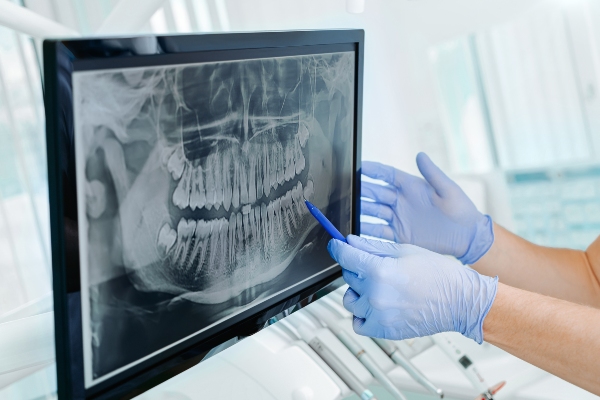
 X-rays are used not only in medical offices but in general dentistry offices as well. This type of assessment is often performed at least once a year at dental checkups, and more often for some patients. While it may seem like a simple step at your biannual appointment, it can be critical for maintaining healthy teeth and gums.
Important uses of dental X-rays
Dental professionals can use a variety of methods to detect and diagnose dental issues:
- Visual examinations
- Discussion of symptoms
- Assessment of affected tissues with dental tools
However, some problems may not be detectable by the naked eye. Others do not demonstrate symptoms above the surface until they have progressed and become serious. X-rays help dentists get a good look at the underlying tissues to properly monitor dental health.
Checking for proper growth and development
X-rays help dentists see that a child's teeth and bones are growing as expected. When abnormalities are detected, dentists can begin treatments at an early age to help prevent speech and digestive issues, as well as facial deformities.
Monitoring existing conditions
People with minor decay, gum disease, or bone loss may receive X-rays more often to monitor these conditions. In some situations, treatment may not be necessary unless the issues show signs of progressing.
Detecting serious dental problems early
While oral cancer is not highly common, it often goes undetected until troublesome symptoms arise. This can limit treatment options or lead to a less favorable outcome for the patient. X-rays can help dentists see the signs of serious issues long before symptoms arise, including tumors and growths, bone deterioration, and some types of infection and decay.
Recognition of X-ray radiation and safety
X-rays expose patients to minor amounts of radiation to obtain detailed images below the surface. While it is important to limit radiation exposure whenever possible, the amount received during a dental X-ray is so small and infrequent that it is not a concern for most normal, healthy patients. In fact, you can be exposed to more radiation when flying in an airplane or from eating certain foods on a regular basis. Refusing to get an X-ray could be more harmful long-term for many people.
General dentistry X-rays are used for patients of all ages, including young children. However, most dentists limit their use in those who are low-risk for certain complications, especially kids. They may be necessary more often for those who have a history of decay or need monitoring for dental issues. In general, dental X-rays are not performed on pregnant women or those who are undergoing certain types of medical treatment.
Conclusion
For most patients, X-days are completely safe and can help dentists detect, diagnose, and treat serious oral health issues. While radiation exposure does occur, the amount is so minimal that the risks from refusing them are usually far greater than the risks for over-exposure. It is important to talk with a dentist about your individual situation to determine how often you should receive general dentistry X-rays.
Request an appointment or call My Saratoga Dentist PLLC at 518-675-3094 for an appointment in our Saratoga Springs office.
Recent Posts
The goal of general dentistry can be expressed as treating tooth decay and oral health issues if necessary and preventing them if possible. One of the most effective tools that dentists use in the prevention of tooth decay is fluoride.The enamel is the outermost layer of the tooth. It consists of minerals that combine to…
Tooth decay occurs when bacteria in the mouth damage the tooth's enamel, causing cavities. General dentistry practices can help prevent tooth decay and treat it to avoid the pain, infection, and potential tooth loss that can result from cavities.Bacteria in the mouth is the cause of tooth decay. When these germs combine with food, plaque…
General dentistry is essential for good oral health at every age. Some parents assume that children do not need routine dental care until permanent teeth start to arrive. However, children of all ages should see a dentist on a regular basis. Parents must also be mindful of their child's tooth and gum development and check…