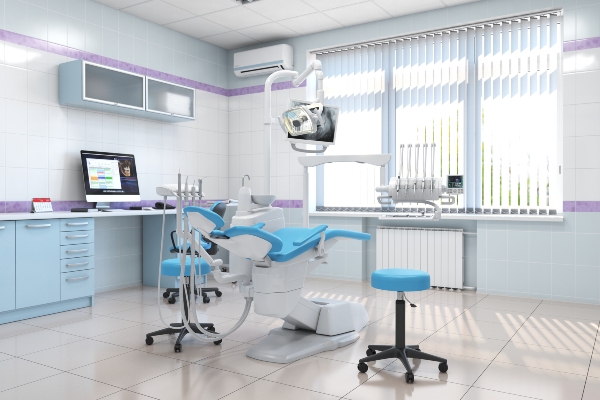
General dentistry is the most common form of dental care. Patients go to general dentists for diagnostic, preventative, and restorative care. Practitioners can perform various types of care for a patient's oral health needs, including the placement of dental bridges. Primary dentists may also educate patients regarding oral hygiene and dental care.
The basics of dental bridges
Practitioners of general dentistry use dental bridges to fill in gaps where patients have missing teeth. The most common reasons for missing teeth include:
- Gum disease
- Congenital conditions
- Tooth decay
- Tooth trauma
When patients have missing teeth, nearby teeth may shift into the gaps. Additionally, opposite teeth may move up or down towards the empty place. When teeth shift, patients may have bite problems, pain, and chewing difficulties.
Types of dental bridges
The most common bridge is the traditional fixed bridge. Conventional bridges have two or more crowns and a filler tooth. The bridge is metal, ceramic, or porcelain fused to metal. Dentists use crowns to hold the bridge in place.
Traditional bridges and implant-supported bridges are similar. Instead of crowns, the patient receives implants to hold the bridge in place. Resin-bonded bridges use porcelain fused to ceramic or metal teeth with wings on each side bonded to the patient's existing teeth.
The last type of bridge is the cantilever bridge. In this type of bridge, the pontic only has one abutment tooth. Dentists may suggest cantilever bridges if a patient has teeth on only one side of a gap.
Preparation for dental bridges
Different types of bridges may require different procedures. Most commonly, the dental provider reshapes the abutment teeth to prepare for the bridge. The general dentist may remove part of the dentin and enamel to create room for the crown. Next, the provider takes impressions of the teeth. Those impressions help build the bridge, crown, and false teeth. On the second visit, the patient receives the permanent bridge.
Advantages of dental bridges
Dental bridges may improve a patient's ability to eat and speak. With missing teeth, patients cannot always eat hard foods. However, once individuals become accustomed to bridges, they can bite down on various foods.
Gaps in a person's teeth may lead to lower self-esteem. Bridges restore a patient's smile and may preserve the jawbone. When people have missing teeth, the lack of stimulation causes jawbone loss. Bone deterioration can alter the shape of a person's face. Patients do not have to remove the bridge to clean it. They can clean the bridge through regular brushing.
Conclusion
General dentistry refers to primary dental practices. A patient may visit their general dentist for diagnostic or preventative treatment. If a person loses his or her teeth due to cavities, trauma, or gum disease, the dentist may suggest a dental bridge to fill the gap. The type of dental bridge depends on how many natural teeth the patient has around the space.
Request an appointment or call My Saratoga Dentist PLLC at 518-675-3094 for an appointment in our Saratoga Springs office.
Recent Posts
The goal of general dentistry can be expressed as treating tooth decay and oral health issues if necessary and preventing them if possible. One of the most effective tools that dentists use in the prevention of tooth decay is fluoride.The enamel is the outermost layer of the tooth. It consists of minerals that combine to…
Tooth decay occurs when bacteria in the mouth damage the tooth's enamel, causing cavities. General dentistry practices can help prevent tooth decay and treat it to avoid the pain, infection, and potential tooth loss that can result from cavities.Bacteria in the mouth is the cause of tooth decay. When these germs combine with food, plaque…
General dentistry is essential for good oral health at every age. Some parents assume that children do not need routine dental care until permanent teeth start to arrive. However, children of all ages should see a dentist on a regular basis. Parents must also be mindful of their child's tooth and gum development and check…