How Long Will Scaling and Root Planing Take?
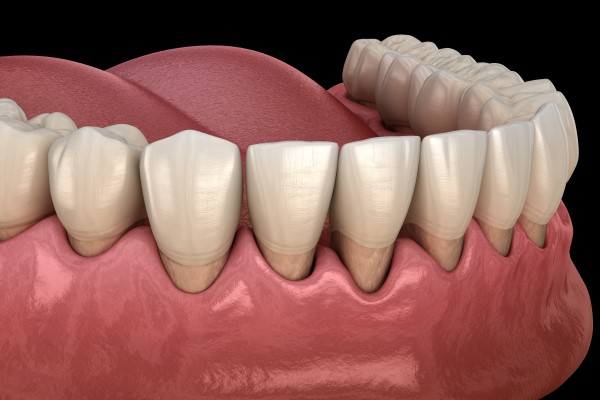
Patients with early signs of gum disease may need to undergo scaling and root planing (also called a deep cleaning) to prevent further oral decay. Deep cleanings are necessary when plaque and tartar have thickened around the teeth beneath the gums, making it inaccessible to a toothbrush or floss. Since this is a specialized type of cleaning, a separate appointment must be made to get the plaque removed.
Fundamentals of scaling and root planing
A dentist will likely recommend a deep cleaning after completing an assessment during a regular annual checkup. Though a deep cleaning may sound intimidating, it is nothing to be worried about; dentists have been doing deep cleanings for decades. Understanding how the procedure works can ease anxiety ahead of the appointment.
Scaling
Plaque contains bacteria that slowly eats away at tooth enamel and the gums. As a result, patients with plaque buildup have deeper “pockets” between the teeth and gums where plaque continues to form. Dentists use specific electric tools called ultrasonic instruments to reach and remove that plaque. They may also use hand instruments for particularly hard-to-reach areas down the root.
Root planing
A tooth’s root sometimes has rough areas on its surface where plaque and bacteria can easily find a home. Root planing smooths those areas down to eliminate bacterial growth and create a surface the gums can adhere to once they have healed.
Appointments
Scaling and root planing generally happen in two appointments. The dentist will clean one half of the mouth in the first appointment and the other half in the second. Depending on the amount of plaque that needs to be removed, an appointment can take up to several hours. The dentist should be able to give a time estimate for each individual.
Preparation
The dentist will ask for each patient’s medical history to make sure no underlying health complications will affect the scaling and root planing procedure. Patients taking certain medications may be asked to stop for a few days leading up to the appointment.
Differences between a regular cleaning and a deep cleaning
A deep cleaning is not the same as a regular cleaning. While it is essential to see a dentist twice a year for regular cleanings, patients may need to go in more often to keep teeth healthy.
Regular cleanings
A routine checkup is designed for patients with healthy gums. Its cleaning procedures involve more surface work and assessing other potential problems. It also occurs in only one visit.
Deep cleanings
A deep cleaning is scheduled after the routine checkup when a dentist has identified gum disease. Deep cleanings are designed to work on unhealthy gums that may be infected or pulling away from teeth. Unlike a regular checkup, this appointment specifically targets plaque.
Conclusion
Understand how plaque can affect teeth in the future and why daily care is so important. Patients can always have questions about sore gums, infection and deep cleanings answered by a dentist.
Request an appointment here: https://www.mysaratogadentist.com or call My Saratoga Dentist PLLC at (518) 675-3094 for an appointment in our Saratoga Springs office.
Check out what others are saying about our dental services on Yelp: Scaling and Root Planing in Saratoga Springs, NY.
Recent Posts
Full mouth reconstruction optimizes oral health, function, and the aesthetic quality of the entire smile when multiple dental issues occur simultaneously. This approach addresses extensive dental concerns all at once rather than treating teeth as separate problems with temporary solutions. Consulting a general dentist can help you create a clear roadmap to eliminate discomfort, correct…
Dental implants are a popular option for replacing missing teeth. While they offer the same aesthetic benefits as other replacement options, there are multiple other benefits provided by dental implants that alternatives fail to deliver.One crucial component of a dental implant is a titanium screw that is placed directly into the jawbone. The screw forms…
The options for replacing missing teeth have brought many people to choose between dentures and dental bridges. It is essential to replace missing teeth for several reasons. Your appearance is affected by missing teeth, and this alone is one of the main reasons people want to replace them. A missing tooth leaves behind a gap…
Dentures are a well-known option for replacing missing teeth that are often given a bad reputation in their reliability. We have all watched the childhood film, where the elderly character has their dentures fall out of their mouth at the dinner table. While this exaggerated age-old misconception is based on legitimate concerns of denture wearing,…