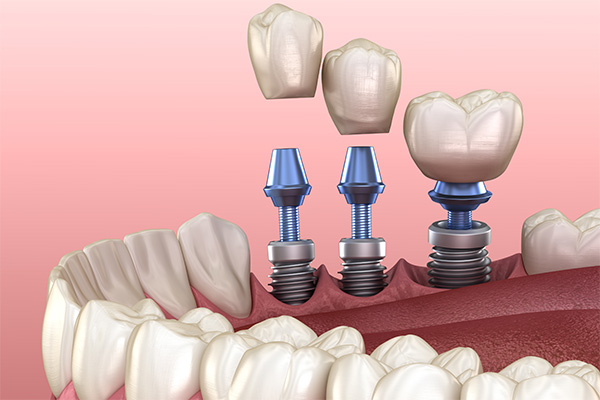
 For patients with dentures, proper denture care is necessary for preserving the life of these appliances and keeping them looking clean and attractive. Like natural teeth, dentures are prone to a buildup of plaque and food debris. With the right care, these prosthetic teeth will retain their shape and look their best.
What denture care is necessary?
Just like natural teeth, dentures need daily care. There are a few steps that need to be taken for proper oral hygiene each day.
Brushing
At a minimum, patients with dentures should brush them at least once per day. However, it is important not to use toothpaste. Toothpaste is designed as an abrasive to clean natural teeth. When used on dentures, it can cause very small scratches where plaque, bacteria and food debris can collect.
Instead, it is a good idea to use a special soft-bristled denture brush with a cleaner designed for dentures. Denture cleaning agents can be harmful if ingested, so patients should rinse dentures with clean water before replacing them.
Dentures are fragile, so it is also wise to place a towel or washcloth in the sink when brushing. If a patient drops the appliance by accident, this will cushion the fall and reduce the risk of the dentures breaking.
Rinsing
In some cases, patients may not be able to thoroughly brush with denture cleaner after each meal, and it is not necessary to use this agent multiple times per day. Instead, most dental professionals recommend thoroughly rinsing dentures with water after eating. Rinsing removes any leftover food particles and helps reduce the risk of plaque buildup.
Soaking
Depending on the type of dentures used, patients may have different instructions for overnight care. Most dentures, however, need to be soaked every night. Soaking helps dentures retain their shape. If they become too dry, dentures may not fit properly.
Soaking in plain water may be acceptable for some dentures, and others may need to soak in a special solution designed for the purpose. Just like denture cleaner, a denture-soaking solution may be damaging to delicate gum tissues. For patients using a soaking agent, it is important to rinse the dentures with water before placing them in the mouth. If denture-soaking or denture-cleaning solutions make contact with mouth tissues, it can cause burning, vomiting or mouth pain.
What happens if dentures are not cared for properly?
Check out what others are saying about our dental services on Yelp: Denture Care in Saratoga Springs, NY.
Denture care can sometimes be inconvenient. Nevertheless, if dentures are neglected, serious problems may occur. Some patients frequently sleep in their dentures. Doing so can result in increased bacterial buildup, which may cause bad breath. If done frequently, sleeping with dentures installed may cause infections.
If dentures are not cleaned thoroughly, plaque may build up. Just like plaque on natural teeth, plaque on dentures will harden and make it easier for bacteria to grow.
For patients new to dentures, dentists will typically go over the right way to care for both the appliance and the gums. Spending some time without wearing dentures, usually while sleeping, is necessary to give gums a rest and promote oral health.
Conclusion
With consistent daily denture care, a patient's dental appliance will likely last many years. For patients unsure of how to properly care for their dentures, contacting a dental office for advice is a wise course of action.
Request an appointment or call My Saratoga Dentist PLLC at 518-675-3094 for an appointment in our Saratoga Springs office.
Recent Posts
Full mouth reconstruction optimizes oral health, function, and the aesthetic quality of the entire smile when multiple dental issues occur simultaneously. This approach addresses extensive dental concerns all at once rather than treating teeth as separate problems with temporary solutions. Consulting a general dentist can help you create a clear roadmap to eliminate discomfort, correct…
Dental implants are a popular option for replacing missing teeth. While they offer the same aesthetic benefits as other replacement options, there are multiple other benefits provided by dental implants that alternatives fail to deliver.One crucial component of a dental implant is a titanium screw that is placed directly into the jawbone. The screw forms…
The options for replacing missing teeth have brought many people to choose between dentures and dental bridges. It is essential to replace missing teeth for several reasons. Your appearance is affected by missing teeth, and this alone is one of the main reasons people want to replace them. A missing tooth leaves behind a gap…