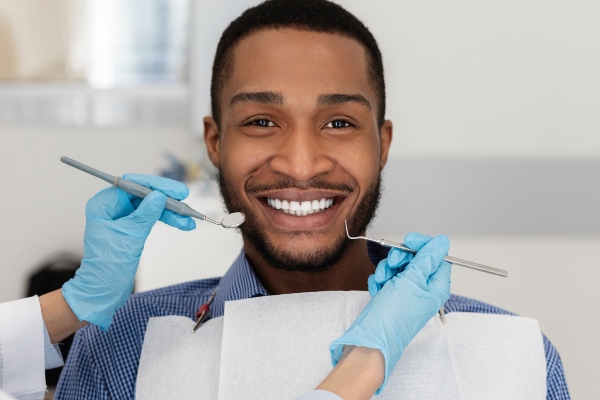
Dental veneers are a solution to cosmetic imperfections in your teeth and are a procedure in the context of general dentistry. Stains, gaps, or chips may be frustrating to deal with, but dental veneers can hide these issues and give you a pleasing white smile.
How dental veneers are used in general dentistry
Dental veneers are a permanent solution for correcting cosmetically damaged teeth. Made up of thin porcelain or composite resin, the thin shells of dental veneers are attached to a tooth using dental cement.
Dentists can install dental veneers, which puts them in the field of general dentistry. This means that all dentists have the proper training to place dental veneers.
Dental veneers have a variety of purposes. They are highly effective for stained teeth, for example. While stained teeth can be bleached, this does not protect them against future staining. One solution for this is to place dental veneers. Dental veneers can also stain if not taken care of properly, but this can usually be reversed by your dentist.
Dental veneers are also useful to disguise cracked or chipped teeth as well as gaps between teeth. While they do not fix these issues, dental veneers can camouflage cosmetic problems such as these.
Finally, if you suffer from erosion or abrasion of tooth enamel, dental veneers can replace the lost enamel.
The procedure for installing dental veneers is relatively simple and painless. First, your dentist will create impressions of your teeth to create a model. The model is then used as a base upon which the veneers are shaped. Using a shade guide, your dentist will determine the precise color the veneers should be. After all this, the veneers are cemented in place to the front of your teeth.
In general dentistry, there are some considerations to keep in mind before you commit to dental veneers. The high cost of dental veneers may be an obstacle for some, and being primarily a cosmetic procedure, they are rarely covered by insurance. Dental veneers can increase how sensitive your teeth are to hot and cold, which may result in discomfort. Veneers do not last forever and must be replaced about every 10 years. In addition, because a certain amount of enamel must be removed before placing dental veneers, the procedure is generally irreversible. If you like the idea of having dental veneers but do not want the process to be irreversible, snap-on veneers may be a more viable option for you.
Brushing, flossing, and regular dental checkups are vital to making your dental veneers last as long as possible. You should also avoid grinding or biting down on hard surfaces. Never use your teeth when trying to open packages or untie a knot.
Conclusion
One permanent solution to cosmetic issues in your teeth is dental veneers. While there may be issues that you need to keep in mind before undergoing the procedure, if you and your dentist agree the procedure is viable, then dental veneers may correct these problems.
Request an appointment or call My Saratoga Dentist PLLC at 518-675-3094 for an appointment in our Saratoga Springs office.
Recent Posts
The mouth can reflect changes occurring elsewhere in the body, making partnering with a general dentist an important part of overall wellness. Routine exams and cleanings help identify oral concerns early, reduce harmful bacterial buildup, and provide patients with practical guidance for maintaining daily oral health. Consistent care also supports communication between dental and medical…
The goal of general dentistry can be expressed as treating tooth decay and oral health issues if necessary and preventing them if possible. One of the most effective tools that dentists use in the prevention of tooth decay is fluoride.The enamel is the outermost layer of the tooth. It consists of minerals that combine to…
Tooth decay occurs when bacteria in the mouth damage the tooth's enamel, causing cavities. General dentistry practices can help prevent tooth decay and treat it to avoid the pain, infection, and potential tooth loss that can result from cavities.Bacteria in the mouth is the cause of tooth decay. When these germs combine with food, plaque…