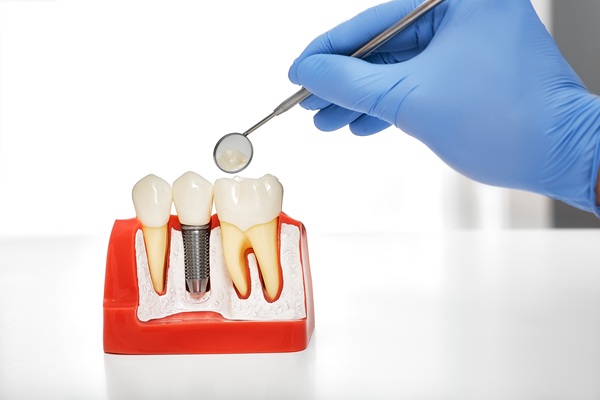
Tooth loss can affect how you eat and speak, as well as how your smile looks. Restorative solutions, like implant crowns, are important for maintaining your dental and overall health. Implant crowns are strong and resemble natural teeth, blending well with surrounding teeth. They imitate the structure of real teeth, providing long-term benefits for those looking for durable solutions for damaged or missing teeth.
Understanding implant crowns
Implant crowns are prosthetic dental restorations designed to replace a missing tooth. Unlike traditional crowns, which act as a cap that protects natural teeth, implant crowns attach to dental implants. Dental implants act as artificial tooth roots that a dentist surgically places into the patient's jawbone. This process ensures long-term stability and durability, preventing issues associated with removable dentures or bridges like premature aging and bone loss. Implant crowns resemble natural teeth in appearance and strength, containing high-quality materials such as porcelain or zirconia.
The benefits of implant crowns
Durability
Dental professionals anchor implant crowns to titanium implants that fuse with the jawbone through a healing process called osseointegration. This design offers long-term reliability. Traditional dental restorations may require adjustments or replacements over time. Fortunately, implant crowns provide lasting performance when properly maintained.
Aesthetic appeal
Implant crowns are also designed to replicate natural teeth' color, shape, and appearance. They enhance the smile without drawing attention to the restoration. Their ability to blend seamlessly with adjacent teeth ensures a natural appearance, potentially boosting the patient's confidence and aesthetic profile.
Improved oral function
Additionally, implant crowns improve oral function. Unlike removable dentures, which can shift and cause gum irritation, implant-supported restorations remain fixed in the mouth. This stability allows individuals to chew, speak, and smile without worrying about their teeth moving. Implant crowns also prevent bone loss, a common issue after losing multiple teeth. Using a titanium post to stimulate the jawbone encourages bone tissue growth while preserving the patient's facial structure.
Implant crowns vs. other dental restorations
Different options exist for replacing missing teeth, but implant crowns have clear benefits. Traditional bridges, for example, need nearby healthy teeth to be filed down to support the restoration. Changing the structure of the teeth can weaken them and raise the chance of decay and cavities in the future. Fortunately, implant crowns stand independently and do not affect nearby natural teeth.
Removable dentures are another popular option for restoring missing or damaged teeth. However, they can cause some issues, such as:
- Gum and mouth irritation
- Difficulty biting and chewing certain foods
- Difficulty speaking
- Excessive saliva production
- Slippage
- Requires additional hygiene procedures
Unlike dentures, implant crowns do not need adhesives or adjustments. They provide a more natural and easy experience than the maintenance required to take care of removable dentures.
The process of placing implant crowns
Getting implant crowns involves several steps. First, the dentist will evaluate the patient's oral health, bone density, and overall gum health to see if they are an ideal candidate for dental implants. In some cases, they may recommend a bone graft to those who need more tissue to support the implant.
During the surgery, the dentist surgically places a titanium post into the patient's jawbone. After placing the implant, the patient will need a healing period of several months to fuse with the bone tissue properly. This bonding process keeps the implant secure and provides a stable foundation for the crown.
Once the implant has fully fused with the jawbone, the dentist will attach an abutment to the top of the post, a small piece connecting the implant to the custom crown. Then, they will secure the crown to the abutment, completing the restoration. Implant crowns can last many years with proper care, including regular dental check-ups and good oral hygiene.
How to take care of implant crowns
While implant crowns are a durable tooth restoration option, patients still need to take steps to maintain them and their overall oral health. They must practice proper oral hygiene, such as brushing and flossing daily. Implant crowns are not vulnerable to cavities. However, patients must keep their gums healthy to prevent complications like peri-implantitis, a periodontal disease where the gum tissue becomes inflamed around the implant. When left untreated, this condition can lead to oral infections and even implant failure.
Additionally, patients will need to avoid placing excessive pressure on implant crowns. This includes chewing hard foods and using their teeth as tools to open packages or bottles. For those who grind or clench their teeth at night, the dentist may recommend wearing a nightguard to protect their natural teeth enamel and the integrity of the implant crown.
Implant crowns can help improve your smile and quality of life
Implant crowns are a durable and natural-looking tooth restoration. Their design ensures years of a healthy smile and an overall higher quality of life. Do you have questions for the My Saratoga Dentist PLLC team? Call our Saratoga Springs to learn more about our teeth replacement options or to schedule a consultation.
Request an appointment here: https://www.mysaratogadentist.com or call My Saratoga Dentist PLLC at (518) 675-3094 for an appointment in our Saratoga Springs office.
Check out what others are saying about our dental services on Yelp: Dental Implants in Saratoga Springs, NY.
Recent Posts
Dental implant restorations have transformed dentistry by offering a versatile and reliable solution for replacing missing teeth. This approach to smile restoration seamlessly combines durability and natural aesthetics, restoring oral function and appearance. Because implant restorations can support different types of dental prosthetics, they address a variety of needs while preserving oral health. Understanding the…
Approval for dental implants puts you one step closer to restoring a complete, healthy smile. Dental implants can restore both the appearance and functionality of a full set of teeth. This way, patients can enjoy a full set of teeth along with a smile they enjoy showing off. The process is somewhat lengthy, so knowing…
Wondering about dental implants? Read on to learn more. If you have experienced tooth loss and are exploring potential replacement options, then you have probably heard about dental implants. Dentists and patients are turning to tooth implants because it is provenly effective for replacing missing teeth. However, there are different implants, each of which is…
Dental implants secure artificial teeth in place, acting as replacement tooth roots. Thus, a general dentist can restore one tooth, several teeth, or even a full mouth of teeth. Since they look, feel, and function like real teeth, they also restore the appearance of a patient’s smile.Dental implants involve surgically implanting titanium screws into the…