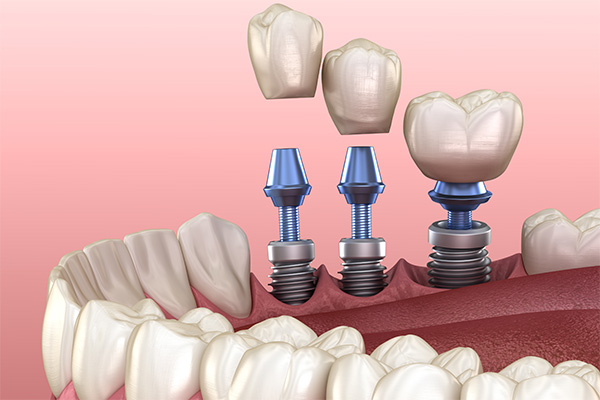
 Have you lost one or more teeth and are you looking for options for replacing missing teeth? Read on to learn about available treatments. For many people, replacing missing teeth is more about their smile's appearance than anything else. Tooth loss, on the other hand, is more than an aesthetic problem. Losing one or more teeth has a broad range of consequences for your oral health, and waiting too long to replace missing teeth may exacerbate these issues. Therefore, it is critical to replace lost teeth as soon as possible.
The importance of options for replacing missing teeth
Here are some of the repercussions of missing teeth on oral health:
Tooth decay
Plaque removal is tough at best, even with electric toothbrushes and dental tools. Missing teeth make brushing and flossing harder than usual, leading to plaque buildup and gum disease, tooth decay, and even further tooth loss.
Bone loss
The loss of a healthy jawbone is a significant issue associated with missing teeth. Teeth make biting and chewing possible, which help keep the jawbones strong and healthy. The jawbone will degenerate over time if missing teeth are not replaced. Generally, any other bodily component that is not functional will atrophy or degenerate, becoming smaller and weaker. This applies to any part of the jaw with missing teeth. Since the area where the tooth is missing is no longer stimulated by chewing forces, the bone height decreases over time.
Chewing difficulties
This is one of the most common side effects of losing molar teeth. If molar teeth are not replaced promptly, it may become challenging to chew on hard foods like nuts or crackers. Similarly, losing a front or incisor tooth may make biting food harder. The more lost teeth they have, the more patients rely on the remaining teeth, putting them under excessive pressure. One tooth is expected to perform the job of many missing teeth and therefore wears down faster than usual.
Nutritional deficiencies
Missing teeth make it harder to chew foods like fresh fruits, healthy grains, and lean meat, restricting one's diet. With a restricted dietary selection, the body begins to lack appropriate nutrients, leading to poor general health.
TMJ issues
The temporomandibular joints (TMJ) are the joints that link the jaw to the skull and aid in chewing. When a tooth is gone, biting and chewing patterns may change, triggering a chain reaction that can contribute to chronic and long-lasting headaches, gum disease, and, if left untreated, further tooth loss. Earache, popping, or a clicking jaw are all symptoms of TMJ dysfunction.
Misaligned teeth
Once there is space on the jaw, the surrounding teeth may move into the space, leading your teeth to become misaligned. The roots of healthy teeth may be compromised when they move into the gap. This may have an impact on the health and integrity of adjacent teeth, as well as lead to additional tooth loss.
In conclusion
It is important to replace missing teeth. The consequences of tooth loss on oral health are often more costly than tooth-replacement options. Contact our dental office today to schedule an appointment and discuss your options for replacing missing teeth.
Request an appointment or call My Saratoga Dentist PLLC at 518-675-3094 for an appointment in our Saratoga Springs office.
Recent Posts
Dental implants are a popular option for replacing missing teeth. While they offer the same aesthetic benefits as other replacement options, there are multiple other benefits provided by dental implants that alternatives fail to deliver.One crucial component of a dental implant is a titanium screw that is placed directly into the jawbone. The screw forms…
The options for replacing missing teeth have brought many people to choose between dentures and dental bridges. It is essential to replace missing teeth for several reasons. Your appearance is affected by missing teeth, and this alone is one of the main reasons people want to replace them. A missing tooth leaves behind a gap…
Dentures are a well-known option for replacing missing teeth that are often given a bad reputation in their reliability. We have all watched the childhood film, where the elderly character has their dentures fall out of their mouth at the dinner table. While this exaggerated age-old misconception is based on legitimate concerns of denture wearing,…