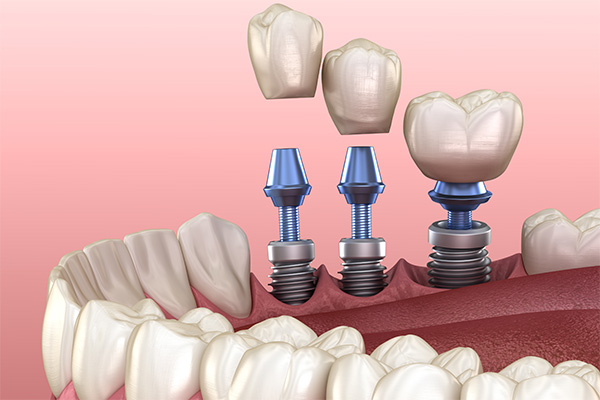
 Fixing a tooth with a crown is a common general dentistry procedure. If a tooth is damaged and a filling cannot fix the problem, or if a tooth is misshapen, putting on a crown may be the solution.
There are several reasons your dentist may recommend a crown. Some of them include:
- Covering a tooth after a root canal procedure
- Covering a poorly shaped or discolored tooth
- Reinforcing a dental implant
- Strengthening a tooth with a large filling
- Protecting a damaged or decaying tooth
- Anchoring a bridge
If your dentist advises a crown and you would like to learn more, here is helpful information.
Preparing for your appointment
Ask your dentist any questions you have about having a crown installed. Because it is a standard procedure, your dentist probably has experience using crowns to fix several types of problems and can answer your questions.
Crowns consist of different types of materials. Your dentist can choose one that is appropriate for your situation.
Porcelain and metal
The most common type of crown uses a base made of precious metal. Your dentist applies porcelain layers on top of it to complete the crown.
Glass
Glass crowns look natural and work well in any area of the mouth.
Porcelain
Porcelain crowns without a metal base are sometimes used in general dentistry for front teeth. They lack the strength of bonded porcelain and metal crowns.
Ceramic
A ceramic crown is stronger than a porcelain crown, and it looks natural. It is suitable for anywhere in the mouth.
Gold-alloy
These long-lasting crowns combine gold and other metal alloys to provide strength.
During and after your appointment
Putting in a crown usually takes two appointments. At the first one, your dentist examines the tooth and surrounding area. Then X-rays are taken to get a closer look at the tooth and bone.
Your dentist then files down the tooth to prepare it for the type of crown you are getting. If you risk infection, your dentist may choose to perform a root canal to prevent further damage to the tooth.
When the tooth is ready, the dentist makes an impression of the tooth and the area above it. This step ensures the crown will correctly fit the tooth and your bite. You will receive a temporary crown until a lab makes the permanent crown. It may take a couple of weeks for it to arrive back at the dentist's office.
At the second appointment, your dentist removes the temporary crown and applies the finished one after checking the color and fit.
You may experience irritation and swelling after the procedure. Your dentist can advise you on caring for the area around your new crown. The tooth may feel different after the process since the shape and size are slightly different than your natural tooth. This sensation is normal and should go away after a few days.
If you experience ongoing pain or problems, ask your dentist to examine the area.
Conclusion
If you are anxious about having a crown installed, Your general dentistry provider can address any concerns you have. The procedure can help protect your oral health for years to come.
Request an appointment or call My Saratoga Dentist PLLC at 518-675-3094 for an appointment in our Saratoga Springs office.
Recent Posts
The goal of general dentistry can be expressed as treating tooth decay and oral health issues if necessary and preventing them if possible. One of the most effective tools that dentists use in the prevention of tooth decay is fluoride.The enamel is the outermost layer of the tooth. It consists of minerals that combine to…
Tooth decay occurs when bacteria in the mouth damage the tooth's enamel, causing cavities. General dentistry practices can help prevent tooth decay and treat it to avoid the pain, infection, and potential tooth loss that can result from cavities.Bacteria in the mouth is the cause of tooth decay. When these germs combine with food, plaque…
General dentistry is essential for good oral health at every age. Some parents assume that children do not need routine dental care until permanent teeth start to arrive. However, children of all ages should see a dentist on a regular basis. Parents must also be mindful of their child's tooth and gum development and check…