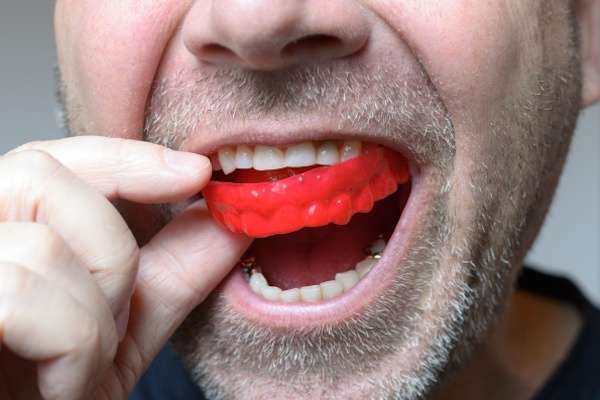
A patient's dentist may recommend custom mouth guards to reduce the effects of bruxism and help prevent long-term tooth damage. Bruxism, or teeth grinding, is a common cause of headaches, jaw pain and similar symptoms. It also can increase a patient's risk for temporomandibular joint (TMJ) syndrome, a condition that may cause jaw joint pain, trouble opening or closing the mouth and difficulty chewing food.
How can patients tell if they need a mouth guard?
While there are conscious steps to take for patients who clench or grind their teeth while awake, those who grind their teeth while asleep may not even be aware that they are doing it. There are several things that can let patients or their dentist know that bruxism is a problem.
Excessive tooth wear
In many cases, a patient's dentist will notice extreme wear on the teeth in a case of bruxism. To prevent further damage and preserve the teeth, the dentist may recommend a custom mouth guard.
Headaches upon waking
Having a headache when waking up is a common sign of bruxism. The prolonged tension resulting from grinding the teeth at night often result in painful headaches.
Pain in the TMJ
The temporomandibular joint (TMJ) often becomes tender to the touch in patients who grind their teeth at night. In some cases, joint pain will be so severe that the patient has trouble open and closing the mouth normally. Bruxism is not the only cause of TMJ pain, but it is a common one.
How does a mouth guard protect the teeth?
Many patients may not think that bruxism is particularly dangerous. However, according to Dentistry Today, bruxism often reaches a force of up to 500 pounds per square inch (psi). This force is many times the force of normal chewing — even biting down on dense, crunchy foods like carrots exerts a force less than 30 psi.
This repeated force can cause damage to the teeth. In some cases, patients with bruxism end up causing severe damage to tooth enamel. Since enamel is the protective layer, patients with bruxism may eventually experience increased sensitivity and even cavities.
Mouth guards provide a layer between the jaws that protects the surfaces of the teeth from further damage. They may not completely stop bruxism, but they do protect the patient's teeth from continually being worn down. Guards designed for night use are custom-fitted by a dentist based on an impression of the patient's teeth. They are usually comfortable and low-profile, and they do not interfere with breathing. Most patients become accustomed to sleeping in mouth guards fairly quickly.
Check out what others are saying about our dental services on Yelp: Mouth Guards in Saratoga Springs, NY.
Conclusion
For patients who grind their teeth at night or suspect they do, a good first step to dealing with the problem is simply talking to a dentist. The dentist can examine teeth for signs of bruxism. If mouth guards are needed, a custom-fitted option keeps the patient comfortable and reduces the often-painful side effects of teeth grinding.
Request an appointment or call My Saratoga Dentist PLLC at 518-675-3094 for an appointment in our Saratoga Springs office.
Recent Posts
For many professional and amateur athletes, mouth guards are essential for protection and safety. Even children and teenagers may require this type of protective equipment in a variety of sports settings. While many universal-fit options are available and easy to access, most dental professionals recommend ordering a custom-fit model from the patient's dental care office.…
Full mouth reconstruction optimizes oral health, function, and the aesthetic quality of the entire smile when multiple dental issues occur simultaneously. This approach addresses extensive dental concerns all at once rather than treating teeth as separate problems with temporary solutions. Consulting a general dentist can help you create a clear roadmap to eliminate discomfort, correct…
Dental implants are a popular option for replacing missing teeth. While they offer the same aesthetic benefits as other replacement options, there are multiple other benefits provided by dental implants that alternatives fail to deliver.One crucial component of a dental implant is a titanium screw that is placed directly into the jawbone. The screw forms…