What Is a Bone Graft, and Why Do Some Dental Implant Patients Need One?

Bone graft procedures are common within dentistry. They can significantly improve a person’s jawbone strength so natural eating and confident smiling can be achieved. Patients who replace missing teeth with dental implants may also benefit greatly from a bone graft.
Want to know more about bone grafts and when they are used? In this article, we discuss them in-depth. This information can be helpful to patients who might be in need of dental implants or just a stronger, more functional jawbone. Dentists work with oral surgeons to determine a plan of action for bone graft placement.
What is a bone graft?
Below, we outline what a bone graft is and how it is used within dentistry.
A bone graft is a piece of bone that is transferred from one part of the body to another. In this case, the bone may be pulled from anywhere within the body that has a substantial amount of strong bone. It is then transferred to the jaw during a surgical procedure. The bone graft allows for strengthening the weak bone so the mouth can get back to functioning normally and naturally.
Why do some dental implant patients need bone grafts?
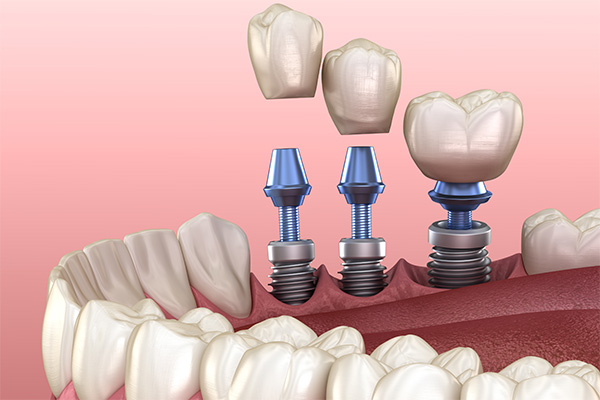
Bone grafts are often used in conjunction with dental implants. They help strengthen the jawbone and ensure that the implants have a reliable bone structure to fuse with. Find out more below!
Damages
People who have missing teeth can often experience damage to their bone structure if the teeth are not replaced early on. Over time, the bone will begin to deteriorate, which can cause other teeth to rot and fall out. The gums may also become infected if the teeth are decaying, which can also cause the interior bone structure to dwindle.
These damages can warrant a need for a bone graft when dental implants are being considered. When the jawbone is deteriorating, implants have a low chance of functioning properly, which is why a bone graft can help improve the overall outcome.
Genetics
Some people are naturally born with a thinner jawbone. In these cases, a bone graft is almost always necessary. Patients who do not have much bone structure within their jaw will not be able to support dental implants. While they may still be able to be placed, they will not fuse properly, which can cause them to be rejected by the body. It is better to have a bone graft placed to help prevent any issues with dental implant placement.
Get started today!
Bone grafts can significantly improve a person’s oral health. If you have any questions or concerns about the procedure itself, then reach out to our office so we can help you. Our team of dentists would be happy to discuss how a bone graft can change your life. Give us a call or stop by today, and we can get you started. We are here to help you!
Request an appointment here: https://www.mysaratogadentist.com or call My Saratoga Dentist PLLC at (518) 675-3094 for an appointment in our Saratoga Springs office.
Check out what others are saying about our services on Yelp: Read our Yelp reviews.
Recent Posts
Full mouth reconstruction optimizes oral health, function, and the aesthetic quality of the entire smile when multiple dental issues occur simultaneously. This approach addresses extensive dental concerns all at once rather than treating teeth as separate problems with temporary solutions. Consulting a general dentist can help you create a clear roadmap to eliminate discomfort, correct…
Dental implants are a popular option for replacing missing teeth. While they offer the same aesthetic benefits as other replacement options, there are multiple other benefits provided by dental implants that alternatives fail to deliver.One crucial component of a dental implant is a titanium screw that is placed directly into the jawbone. The screw forms…
The options for replacing missing teeth have brought many people to choose between dentures and dental bridges. It is essential to replace missing teeth for several reasons. Your appearance is affected by missing teeth, and this alone is one of the main reasons people want to replace them. A missing tooth leaves behind a gap…
Dentures are a well-known option for replacing missing teeth that are often given a bad reputation in their reliability. We have all watched the childhood film, where the elderly character has their dentures fall out of their mouth at the dinner table. While this exaggerated age-old misconception is based on legitimate concerns of denture wearing,…