 In general dentistry, preventative procedures are the most cost-effective and high-impact methods of keeping patients' smiles healthy and beautiful. However, when damage or decay occurs, restorative practices are available to correct the damage and rehabilitate the smile.
How can general dentistry practices restore teeth?
Restorative practices through general dentistry include procedures that repair damage to the teeth and gums. These procedures are intended for health purposes rather than cosmetic fixes, although they usually result in improvements to the appearance of the teeth. The following dental practices are commonly used in restoration of teeth.
Bridges
A bridge may be used by your general dentistry office to fill a gap in your smile. Crowns on adjacent teeth secure the bridge, which is comprised of a single false tooth or even a row of teeth.
Composite bonding
Composite bonding is a general dentistry option for correcting aesthetic issues such as cracked, chipped, or discolored teeth. Very little of the original tooth is removed for this procedure, which includes the use of a chemical bonding process to adhere a composite material to the existing tooth.
Crowns
Cracked, damaged, or decayed teeth may need to be capped with a crown, which is placed over the troubled tooth to strengthen it and restore its functionality and appearance. Your general dentistry office can create crowns with a variety of materials, but the most popular is a natural color that blends in with existing teeth.
Dentures
If your smile suffers from damaged gum tissue or missing teeth, dentures are an option to restore functionality. Depending on your needs, your general dentistry professional may recommend full, partial, or implanted dentures to enhance your smile, ease the process of eating, and alleviate trouble with speaking.
Fillings
Dental fillings are performed more than any other type of general dentistry procedure. This treatment option replaces damaged parts of the tooth where cavities have formed. The decayed part of the tooth is removed and replaced with a composite material to stabilize the tooth and prevent further damage.
Implants
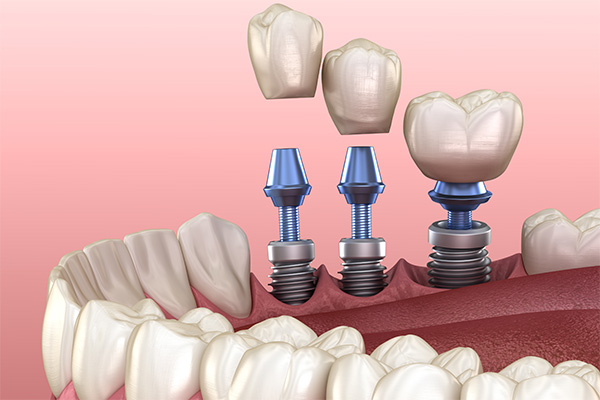
Implants provide an additional option for tooth replacement. A titanium root anchors the implant into the gum, avoiding the need for altering the adjacent teeth and applying crowns, which is required for bridges. Implants generally look and function like natural teeth.
Root canals
Teeth that are badly decayed may not be sufficiently repaired with a filling. In these cases, root canals are used to remove decay from the tooth and its root. The empty root is then filled with a compound and capped with a dental crown for restoration of the tooth's functionality, strength, and appearance.
Veneers
The appearance of teeth that are chipped, crooked, discolored, or misshapen can be improved with the use of veneers. These porcelain shells that are bonded to the teeth are often chosen as a simpler procedure for improving the smile, in place of braces or other time-consuming treatment options.
Conclusion
Your general dentistry office will always recommend strong preventative practices to keep your smile beautiful. However, should the need arise, a variety of restorative procedures are also available to return your mouth to its healthy appearance and function.
Request an appointment or call My Saratoga Dentist PLLC at 518-675-3094 for an appointment in our Saratoga Springs office.
Recent Posts
The goal of general dentistry can be expressed as treating tooth decay and oral health issues if necessary and preventing them if possible. One of the most effective tools that dentists use in the prevention of tooth decay is fluoride.The enamel is the outermost layer of the tooth. It consists of minerals that combine to…
Tooth decay occurs when bacteria in the mouth damage the tooth's enamel, causing cavities. General dentistry practices can help prevent tooth decay and treat it to avoid the pain, infection, and potential tooth loss that can result from cavities.Bacteria in the mouth is the cause of tooth decay. When these germs combine with food, plaque…
General dentistry is essential for good oral health at every age. Some parents assume that children do not need routine dental care until permanent teeth start to arrive. However, children of all ages should see a dentist on a regular basis. Parents must also be mindful of their child's tooth and gum development and check…