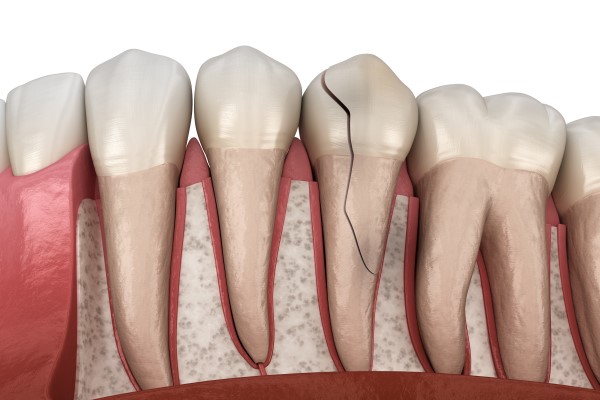
A broken tooth is a serious and sometimes scary matter that can be treated by a dental professional in various ways, depending on its severity. However, there are certain things that you should do before arriving at the dentist to restore the health and appearance of your broken tooth. This review discusses how to handle a broken tooth properly to help ensure that the issue does not worsen or cause more discomfort than necessary.
The six-step process of dealing with a broken tooth
During the phone call with the dentist, the staff can help the patient determine whether it is best to visit the dentist immediately or wait for a more suitable time. Regardless, cleaning the mouth and controlling the bleeding and discomfort is important before going to the dentist for treatment.
Determine the cause
The first thing a patient should do may seem simple but it is, in fact, a crucial step. Determine the causing factor of a broken tooth. For some, this will be easy if it happened during an accident such as a sports injury or even while chewing something hard such as ice cubes, popcorn kernels, or candy. However, for others, it may not be as simple. Sometimes, a broken tooth can be a result of hidden decay that weakened the tooth and causes the break.
Call the dentist
Regardless of the severity of the broken tooth, it is important to call the dentist to find out the best course of action to take. Depending on the level of pain the patient is in and their symptoms, the dentist may recommend coming in right away for broken tooth treatment, or they can provide care instructions to help the patient control their symptoms until they can arrive at the dentist's office at a more convenient time.
Clean the mouth
Keeping the mouth clean is the number-one goal with a broken tooth. Patients can do so by using a saltwater rinse several times a day and drinking water throughout the day to keep bacteria washed away. Mix one teaspoon salt and eight ounces of warm water to prepare a solution. Then the patient will swish the solution around their mouth for about a minute. It is also important to avoid eating foods and drinks containing a large amount of sugar and practice good oral hygiene regularly until dental appointments.
Stop the bleeding
If there is any blood in the broken tooth's immediate aftermath, it is a sign that the patient may need to visit the dentist for emergency dental care. The dentist can control minor bleeding with the use of gauze applied to the affected tooth. Apply the gauze after cleaning the mouth.
Relieve the pain
Patients can relieve the pain of a broken tooth by taking over-the-counter pain relief medication (as directed). If there is swelling associated with the pain, apply a cold compress to help reduce it. The patient can use ice packs or even bags of frozen vegetables (if it is an emergency) as a compress. It is important to note never to apply the cold compress directly to the mouth or on the skin. Wrap the compress in a cloth first. If the dentist recommends waiting a day or two before coming in, the patient should stick to a diet of soft foods and foods and drinks that are room temperature to avoid irritation.
Visit the dentist
Do not neglect to visit the dentist after a broken tooth. Often, the initial symptoms go away, but it is still important to visit the dentist for restorative treatment, even if there are no symptoms. Broken teeth can lead to infection, pain, and additional tooth loss. A broken tooth or teeth can spread bacteria into other parts of the patient's mouth, leading to more severe damage, such as spreading infection into the jawbone or brain. The dentist is equipped with technology such as X-ray machines and necessary materials to properly assess the extent of the break.
Call our dental team today for broken tooth treatment
If you are in need of broken tooth treatment, then contact our dental practice today. We can properly assess your symptoms and help you determine an effective and custom course of action. We may recommend that you come into our office for prompt care if there is pain or excessive swelling, or we may provide you with at-home care instructions until you can come in at a more convenient time.To schedule an appointment at My Saratoga Dentist PLLC’s Saratoga Springs office, call us at 5186753094.
Check out what others are saying about our dental services on Yelp: General Dentist in Saratoga Springs, NY.
Recent Posts
The goal of general dentistry can be expressed as treating tooth decay and oral health issues if necessary and preventing them if possible. One of the most effective tools that dentists use in the prevention of tooth decay is fluoride.The enamel is the outermost layer of the tooth. It consists of minerals that combine to…
Tooth decay occurs when bacteria in the mouth damage the tooth's enamel, causing cavities. General dentistry practices can help prevent tooth decay and treat it to avoid the pain, infection, and potential tooth loss that can result from cavities.Bacteria in the mouth is the cause of tooth decay. When these germs combine with food, plaque…
General dentistry is essential for good oral health at every age. Some parents assume that children do not need routine dental care until permanent teeth start to arrive. However, children of all ages should see a dentist on a regular basis. Parents must also be mindful of their child's tooth and gum development and check…
It is widely known in general dentistry that some foods are better for the teeth and gums than other foods. Consistently eating foods that are bad for your teeth can, over time, lead to painful dental conditions that are often costly to treat. Fortunately, it is easy to avoid or reduce certain foods to lower…