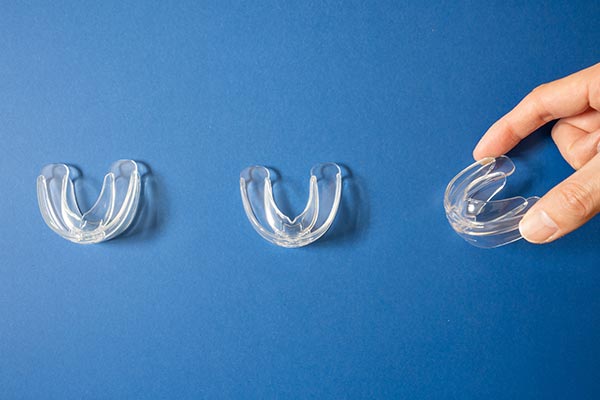
A general dentist may recommend a mouthguard to protect the teeth from damage that can occur from teeth grinding, sports injuries, or physically strenuous jobs. Grinding can be difficult to treat, but a patient can be helped by a thin mouthguard on the upper or lower teeth to prevent friction from occurring. Other types of mouthguards, such as those made for contact sports, keep the teeth and surrounding soft tissues safe during tackles and falls.
Over-the-counter mouthguards versus custom mouthguards
Mouthguards are available without a prescription or a dentist’s appointment, but these generic models will likely not fit the patient's mouth perfectly. Dental appliances that are not custom-made may cause chafing, mouth sores, and an overall feeling of discomfort for the patient. Over-the-counter guards may suffice as a temporary protective appliance for the teeth, but patients who suffer from moderate to severe bruxism or who need a more comfortable guard for long hours of sports practice can benefit from talking to a general dentist about being fitted for a quality mouthguard that will last for years.
Types of mouthguards general dentists can prescribe
While mouthguards can be crafted to fit over a patient’s top or bottom teeth, the style, thickness, and material is decided upon by the general dentist. The dentist collaborates with the patient to decide which type of guard is the most appropriate.
Mouthguards for those with medical concerns
Patients who suffer from tooth grinding, or bruxism, may contend with frequent headaches as well as jaw soreness and stiffness. While bruxism patients may think that these uncomfortable and often painful symptoms are a fact of life, many are not aware that teeth grinding can lead to more severe concerns like temporomandibular joint pain and cracked teeth. Grinding is unlikely to permanently damage teeth in the short term, but if the friction continues over weeks or years, tooth enamel and even the teeth themselves can be worn down.
Patients who are at higher risk for damaging teeth as a result of bruxism may be prescribed a thicker guard than those who have a milder form of the condition. These mouthguards can be worn at any time of day, but they are most often worn at nighttime when grinding cannot be consciously controlled.
Mouthguards for athletes
Individuals who play sports with a high risk of injury, such as football, hockey, basketball, and boxing, can benefit from wearing a mouthguard. This type of guard is designed to protect the tongue, inner cheeks, lips, and gums as well as the teeth during intense periods of physical activity. Sports mouthguards are generally bigger than nightguards as they are designed to safeguard against dental trauma. Younger athletes may be interested to know that sports mouthguards often come in a range of colors.
Conclusion
Dental appliances have a reputation for being bulky and irritating to wear; however, custom guards can be sculpted to provide maximum comfort for the patient. Consult with a general dentist to ascertain whether a mouthguard is the right choice for your lifestyle and dental needs.
Request an appointment or call My Saratoga Dentist PLLC at 518-675-3094 for an appointment in our Saratoga Springs office.
Recent Posts
The goal of general dentistry can be expressed as treating tooth decay and oral health issues if necessary and preventing them if possible. One of the most effective tools that dentists use in the prevention of tooth decay is fluoride.The enamel is the outermost layer of the tooth. It consists of minerals that combine to…
Tooth decay occurs when bacteria in the mouth damage the tooth's enamel, causing cavities. General dentistry practices can help prevent tooth decay and treat it to avoid the pain, infection, and potential tooth loss that can result from cavities.Bacteria in the mouth is the cause of tooth decay. When these germs combine with food, plaque…
General dentistry is essential for good oral health at every age. Some parents assume that children do not need routine dental care until permanent teeth start to arrive. However, children of all ages should see a dentist on a regular basis. Parents must also be mindful of their child's tooth and gum development and check…