You May Need Oral Surgery to Repair the Damage of Gum Recession
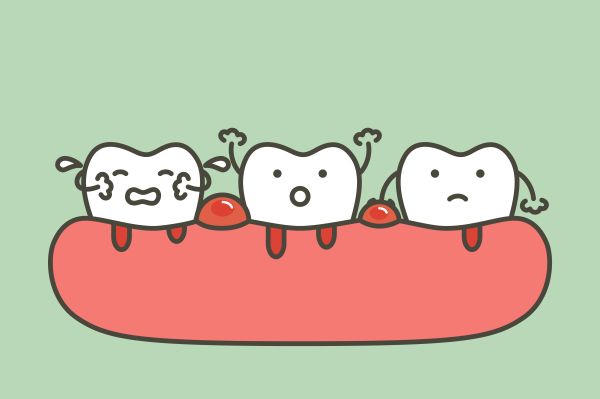
Looking for answers to your gum recession problem? When the gums around your teeth begin to expose the roots of your teeth, only dental treatment can correct the problem. This exposure causes gaps to form that support disease-causing bacteria, which will lead you to experience even more dental problems in the future. Untreated gum recession will eventually damage the gum tissue and root structures of the teeth. Tooth loss is a real possibility for dental patients who do not seek to repair their gum recession problem in a timely manner.
Signs of receding gums
Wanting more information on the signs of receding gums? Many patients do not even realize that their gums are receding as the beginning stages of gum recession produce minimal signs. Since gum recession is always easier to treat in its earliest stages, it is important to recognize this often barely noticeable sign. The two more common signs that appear in the beginning stages include tooth sensitivity and teeth that look longer than usual. According to the American Dental Association, since the root surface does not have a hard enamel covering like the top of the tooth, the root may become sensitive to hot and cold and the exposed tooth root is more at risk for decay.
Causes of gum recession
Some of the more common causes of gum recession include:
- Periodontal disease
- Bruxism (a condition that causes one to grind or clench their teeth)
- A misaligned bite
- Crooked teeth
- Brushing too hard
- Hormonal changes
- Smoking tobacco products
- Genetics
Treatment options for gum recession
The most common option for treating gum recession includes the process of scaling and root planing. During this procedure, a dental professional uses special dental tools to remove all the plaque and tartar buildup. This allows patients a fresh start at using proper oral care.
Oral surgery to repair the damage of gum recession
When gum recession reaches a certain point, the process of scaling and root planing is no longer an option. The next step is undergoing oral surgery. There are a few different types of surgical procedures available for dental patients who have reached this stage, during which time a dental professional will decide on the right method of treatment for each individual patient. Surgical options to repair gum recession damage include flap surgery, soft tissue grafts and regeneration.
How bad is your gum recession?
Are you experiencing gum recession? Do you think you require oral surgery in order to repair the damage caused by your receding gums? The only way for you to know for sure is to make an appointment for a thorough evaluation of your gums and teeth. Once the gaps in your mouth become too deep, scaling and root planing is not a treatment option. Your next option is undergoing oral surgery to take care of your gum recession problem. Ready to take the next step and make an appointment with us?
Request an appointment here: https://www.mysaratogadentist.com or call My Saratoga Dentist PLLC at (518) 675-3094 for an appointment in our Saratoga Springs office.
Check out what others are saying about our services on Yelp: Read our Yelp reviews.
Recent Posts
A tooth fracture can occur from many causes, such as accidents, grinding teeth, eating hard foods, and aging. Fractured teeth do not heal themselves, so visiting your general dentistry professional in the event of a cracked, broken, or fractured tooth is always advisable.Cracks in your teeth can manifest in different ways. Some are painful and…
Your general dentistry professional knows that oral health has a strong connection to the body's overall wellness level. The mouth is the point of entry to the respiratory and digestive tracts, and the usually harmless bacteria that enters the mouth regularly can cause disease in those areas. Without sufficient oral hygiene to control the growth…
Finding a qualified general dentistry professional is an important task made more difficult if the thought of visiting the dentist causes anxiety, as it does for so many people. Remember that the dentist you choose will serve as an important partner for your oral health and overall wellness, as poor oral hygiene can lead to…
A general dentistry approach to strengthening teeth often begins with protecting each tooth's enamel and making a plan to cover it if it is extensively damaged. Signs of enamel problems may present in the early stages with sensitivity to cold or sweet foods. Often, if this important outer coating cannot be strengthened enough to prevent…