You May Need Oral Surgery to Repair the Damage of Gum Recession
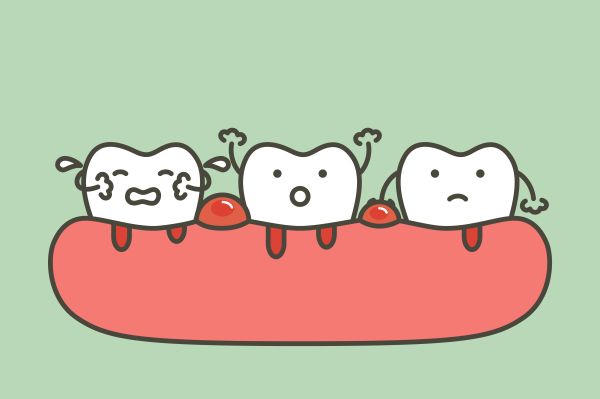
Looking for answers to your gum recession problem? When the gums around your teeth begin to expose the roots of your teeth, only dental treatment can correct the problem. This exposure causes gaps to form that support disease-causing bacteria, which will lead you to experience even more dental problems in the future. Untreated gum recession will eventually damage the gum tissue and root structures of the teeth. Tooth loss is a real possibility for dental patients who do not seek to repair their gum recession problem in a timely manner.
Signs of receding gums
Wanting more information on the signs of receding gums? Many patients do not even realize that their gums are receding as the beginning stages of gum recession produce minimal signs. Since gum recession is always easier to treat in its earliest stages, it is important to recognize this often barely noticeable sign. The two more common signs that appear in the beginning stages include tooth sensitivity and teeth that look longer than usual. According to the American Dental Association, since the root surface does not have a hard enamel covering like the top of the tooth, the root may become sensitive to hot and cold and the exposed tooth root is more at risk for decay.
Causes of gum recession
Some of the more common causes of gum recession include:
- Periodontal disease
- Bruxism (a condition that causes one to grind or clench their teeth)
- A misaligned bite
- Crooked teeth
- Brushing too hard
- Hormonal changes
- Smoking tobacco products
- Genetics
Treatment options for gum recession
The most common option for treating gum recession includes the process of scaling and root planing. During this procedure, a dental professional uses special dental tools to remove all the plaque and tartar buildup. This allows patients a fresh start at using proper oral care.
Oral surgery to repair the damage of gum recession
When gum recession reaches a certain point, the process of scaling and root planing is no longer an option. The next step is undergoing oral surgery. There are a few different types of surgical procedures available for dental patients who have reached this stage, during which time a dental professional will decide on the right method of treatment for each individual patient. Surgical options to repair gum recession damage include flap surgery, soft tissue grafts and regeneration.
How bad is your gum recession?
Are you experiencing gum recession? Do you think you require oral surgery in order to repair the damage caused by your receding gums? The only way for you to know for sure is to make an appointment for a thorough evaluation of your gums and teeth. Once the gaps in your mouth become too deep, scaling and root planing is not a treatment option. Your next option is undergoing oral surgery to take care of your gum recession problem. Ready to take the next step and make an appointment with us?
Request an appointment here: https://www.mysaratogadentist.com or call My Saratoga Dentist PLLC at (518) 675-3094 for an appointment in our Saratoga Springs office.
Check out what others are saying about our services on Yelp: Read our Yelp reviews.
Recent Posts
Full mouth reconstruction optimizes oral health, function, and the aesthetic quality of the entire smile when multiple dental issues occur simultaneously. This approach addresses extensive dental concerns all at once rather than treating teeth as separate problems with temporary solutions. Consulting a general dentist can help you create a clear roadmap to eliminate discomfort, correct…
Dental implants are a popular option for replacing missing teeth. While they offer the same aesthetic benefits as other replacement options, there are multiple other benefits provided by dental implants that alternatives fail to deliver.One crucial component of a dental implant is a titanium screw that is placed directly into the jawbone. The screw forms…
The options for replacing missing teeth have brought many people to choose between dentures and dental bridges. It is essential to replace missing teeth for several reasons. Your appearance is affected by missing teeth, and this alone is one of the main reasons people want to replace them. A missing tooth leaves behind a gap…
Dentures are a well-known option for replacing missing teeth that are often given a bad reputation in their reliability. We have all watched the childhood film, where the elderly character has their dentures fall out of their mouth at the dinner table. While this exaggerated age-old misconception is based on legitimate concerns of denture wearing,…